New-piano dealers will tell you 97% of concert artists choose a new Steinway. Restorers will tell you the old ones were built from wood you can’t get anymore. Both are selling you something — including us. So instead of a sales pitch, here is what we tell people who call our shop, including the honest cons, and the six questions that protect you no matter who you buy from.
- A properly restored vintage Steinway plays and sounds like a new Steinway at roughly half the price — if the restoration was done right. That “if” is everything.
- Piano restoration is an unregulated industry: anyone can hang a sign and call themselves a Steinway expert.
- The quality of the instrument is exactly the quality of the hands that rebuilt it.
What “Restored” Actually Means
A restored Steinway has had its worn components rebuilt or replaced — fully or partially. On a full restoration that typically means a new or restored soundboard, new pin block, new strings and pins, a completely rebuilt action, new hammers, and a refinished case and plate. On a partial restoration, the client picks what matters: we’ve restored pianos mechanically to like-new condition for owners who didn’t care that the finish had “alligator skin” crackling, and we’ve refinished cases on pianos whose owners loved the original plate untouched.
Here’s the question every buyer eventually asks, answered by Eric Lindeblad, third-generation craftsman:
The Case for Restored
The wood. Steinways from the Golden Age (roughly 1900–1940) were built when old-growth, tight-grain lumber was still available. Those rims and cases are not replicable today at any price.
The plate. Look inside a pre-1940 Steinway and you’ll see “Steinway Foundry Casting” — the plate was cast at Steinway’s own foundry. After the early 1940s, Steinway stopped making plates in-house.
The price. A new Model A runs around $130,000–$135,000. Fully restored, the same piano is typically $50,000–$65,000. Across the lineup the savings run 40–55%. (Full numbers by model in our Steinway Price Guide.)
The customization. Buying new, you choose a finish. Restoring, you choose everything: Renner or New York hammers, brass or nickel hardware, historically accurate decal or modern, satin or high gloss, even custom stains and colors. We’ve done blue.
The Case Against Restored (Yes, Really)
We sell restored Steinways, and you should still hear the cons from us.
It’s unregulated. No licensing, no oversight. The work is only as good as the experience of the person doing it — and a technician six months into the craft can legally sell you the same “fully restored Steinway” as a 30-year master.
You can’t always see the difference. Like a used car with fresh paint and new tires but the original engine, a piano can look immaculate and be mechanically wrong inside. We’ve had “restored” pianos arrive at our shop that were never regulated, with parts that didn’t belong in them.
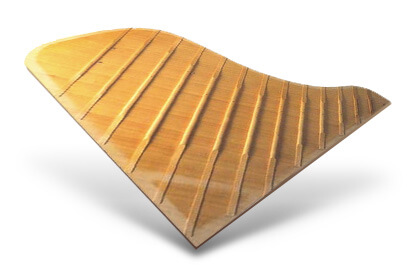
Complexity. There are over 12,000 parts in a piano and thousands of judgment calls in a restoration. Keep the soundboard or replace it? A soundboard can look perfect and be dead — if it has lost its crown (the slight upward arch that presses the strings), the piano will never sing. Galo Torres, who spent 30 years at the Steinway factory before joining us, put it simply: a collapsed soundboard has no crown, and no finish in the world fixes that.
The 6 Questions That Protect You
Ask these of any restoration shop or dealer — including us.
For the record, our answers: restorations are done in-house in our 25,000 sq. ft. New Jersey facility by a team that includes craftsmen with 30, 8, and 5 years inside the Steinway factory itself; every piano ships with a full parts list, a warranty of up to 20 years, and a 30-day money-back guarantee.
Restored vs. New, Side by Side
| New Steinway | Properly Restored Steinway | |
|---|---|---|
| Price | $92,000 – $235,000+ | Typically 40–55% less |
| Wood | Modern plantation-grown lumber | Golden Age old-growth case and rim |
| Plate | Outsourced casting | Pre-1940: cast at Steinway’s own foundry |
| Mechanics | All new | All new (action, strings, pins, hammers, felts) |
| Customization | Finish options | Hammers, hardware, decal, finish, custom colors |
| First-owner depreciation | Steep — like driving a new car off the lot | Already absorbed by the first owner |
| Risk | Low — factory consistency | Depends entirely on who did the restoration |
See Our Restored Steinways, With Prices
Questions from Our Livestream Audience
Will restoration preserve the piano’s original tone, or will it sound like a newer Steinway?
We keep restorations historically accurate: the same size strings come out and go back in, the same size hammers, everything dimensionally authentic to when the piano was designed. The goal is the voice the piano was built to have, with the reliability of new components.
How do I date or verify a Steinway serial number?
The serial number is stamped on the plate, usually visible near the tuning pins. Steinway’s records map serial numbers to build years. Send us your serial number and we’ll date it for you, and tell you whether the plate is a pre-1940 Steinway foundry casting.
What does it cost to restore a Steinway?
There are three main areas: the finish, the action, and the belly (soundboard, bridges, pin block). Each typically runs $10,000–$20,000, so a full restoration depends on what you choose to do. Buying one of our already-restored Steinways generally costs less than buying an unrestored piano and restoring it.
When does a soundboard have to be replaced?
Two cases: a “critical crack” that runs under the bridge, where string pressure weakens the foundation, or a collapsed crown — a soundboard that has lost its upward arch. A board can look perfect and still be dead. On pianos over six feet we usually install a new soundboard; under six feet the original can often be saved.
Do you restore pianos other than Steinway?
Yes — Chickering, Baldwin, Knabe, Mason & Hamlin, and most American makes from about 1880 forward. Send photos for a free consultation, or hop on a video call and show us the piano.
The Bottom Line
A restored Steinway is not automatically a bargain, and a new Steinway is not automatically better. The instrument is only ever as good as the people who built it the second time. Ask the six questions. Listen before you buy — we’ll send you a video of any piano on our floor being played. And whichever way you go, you’ll go with open eyes.
Free Steinway Sizing Template
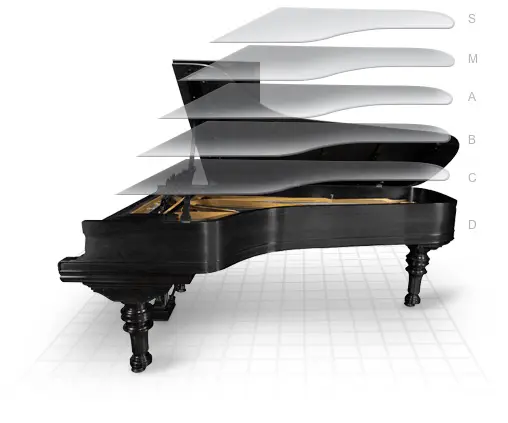
It is hard to picture how a Model M, B or D would sit in your own room. We will mail a full-size Steinway sizing template to your home, free of charge, so you can lay it on the floor and see.
Send My Sizing TemplateSelling a Steinway instead? Share the details and request an offer.

About the author
Todd Lindeblad
Todd is the fourth generation to run Lindeblad Piano, family-owned since 1920. He has personally guided Grammy winners, concert pianists, and thousands of families to their ideal Steinways.
More from Todd